Mostrando entradas con la etiqueta Art. Mostrar todas las entradas

sábado, 20 de mayo de 2017

Art for this week

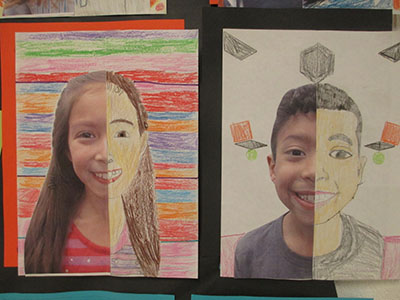
For Art this week (6ºB) and next week (6ºA) you will need to bring a photo. We have been working on symmetry, and we are going to do symmetry portraits.

https://www.scholastic.com/content/dam/teachers/blogs/migrated-featured-images/gc_symmetry.jpg

https://s-media-cache-ak0.pinimg.com/236x/17/5f/2f/175f2f8fd7283042c67d8378b9ffe9f6.jpg

The photo should be of you and should show your face in a fairly large size. You can print one on regular paper or use a photocopy, or bring a regular photo ( we will need to cut it in half.)  

Make sure it is not too small!  

sábado, 13 de mayo de 2017

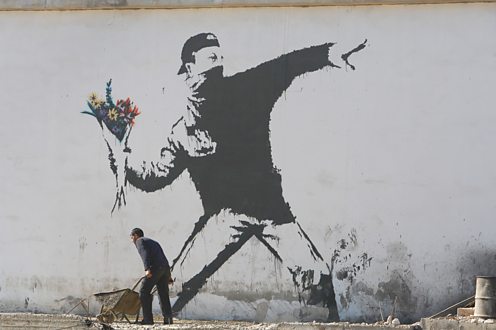
Banksy paints Brexit!

Who is Banksy?

He is a British street artist whose works appear in different locations around the world. His identity is a secret, so he must work quickly to avoid being discovered.

He uses stencils (plantillas) to create his art, which often has a message.  Here are a few of his most famous works:


On Monday, 8th of May, this Banksy mural appeared in Dover, near the ferry that connects the UK with France:

https://www.ft.com/__origami/service/image/v2/images/raw/http%3A%2F%2Fcom.ft.imagepublish.prod.s3.amazonaws.com%2F34d881bc-340b-11e7-99bd-13beb0903fa3?source=next&fit=scale-down&width=600

It shows a worker removing one of the stars from the EU flag, now that the United Kingdom has voted to leave the European Union.

If you want to see more artwork by Banksy, here is his official website.

martes, 14 de marzo de 2017

Wampum

In class we are learning about wampum belts. They were made from shells and were used to mark important occasions or treaties. Later they were used for money.

You can make a virtual wampum belt here.  

https://s-media-cache-ak0.pinimg.com/originals/bf/83/08/bf8308541fd5e044d52972b9c1426ec4.jpg

Hiawatha wampum belt

sábado, 25 de febrero de 2017

domingo, 12 de febrero de 2017

Pop Art Love

Here are some artworks from the Pop Art movement, just in time for Valentine's Day!

Robert Indiana was born in 1928.


http://ichef.bbci.co.uk/wwfeatures/wm/live/1280_720/images/live/p0/1j/cw/p01jcw47.jpg

https://s-media-cache-ak0.pinimg.com/originals/7c/b4/e8/7cb4e84062ff6101b88468e9235195af.jpg


Keith Haring was born in 1958 and died in 1990.

https://barryraphael.files.wordpress.com/2012/12/keith-haring-heart.jpg

https://s-media-cache-ak0.pinimg.com/736x/e0/81/ae/e081ae4a94113b1221dbca0406b8bfe4.jpg

https://ih0.redbubble.net/image.204474910.2038/flat,1000x1000,075,f.u1.jpg

lunes, 9 de enero de 2017

Patterns!

A pattern is a drawing of lines, shapes, or objects that is repeated.  Patterns are everywhere!  We can find them in nature:


https://s-media-cache-ak0.pinimg.com/originals/b8/6e/9a/b86e9a803cdea3e391db28d2593c158e.jpg

https://qph.ec.quoracdn.net/main-qimg-845b4284872d91c9e4ba31fa042f7024-c?convert_to_webp=true

https://www.robertharding.com/blog/wp-content/uploads/2014/01/817-123034.jpg

https://s-media-cache-ak0.pinimg.com/originals/f5/7f/b1/f57fb134a7ef4a6984d7dbf9011ac0c0.jpg

https://s-media-cache-ak0.pinimg.com/736x/17/3c/b2/173cb24d9de6f055b92ebed4bfbc197c.jpg

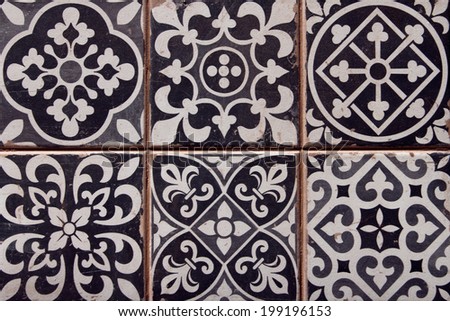
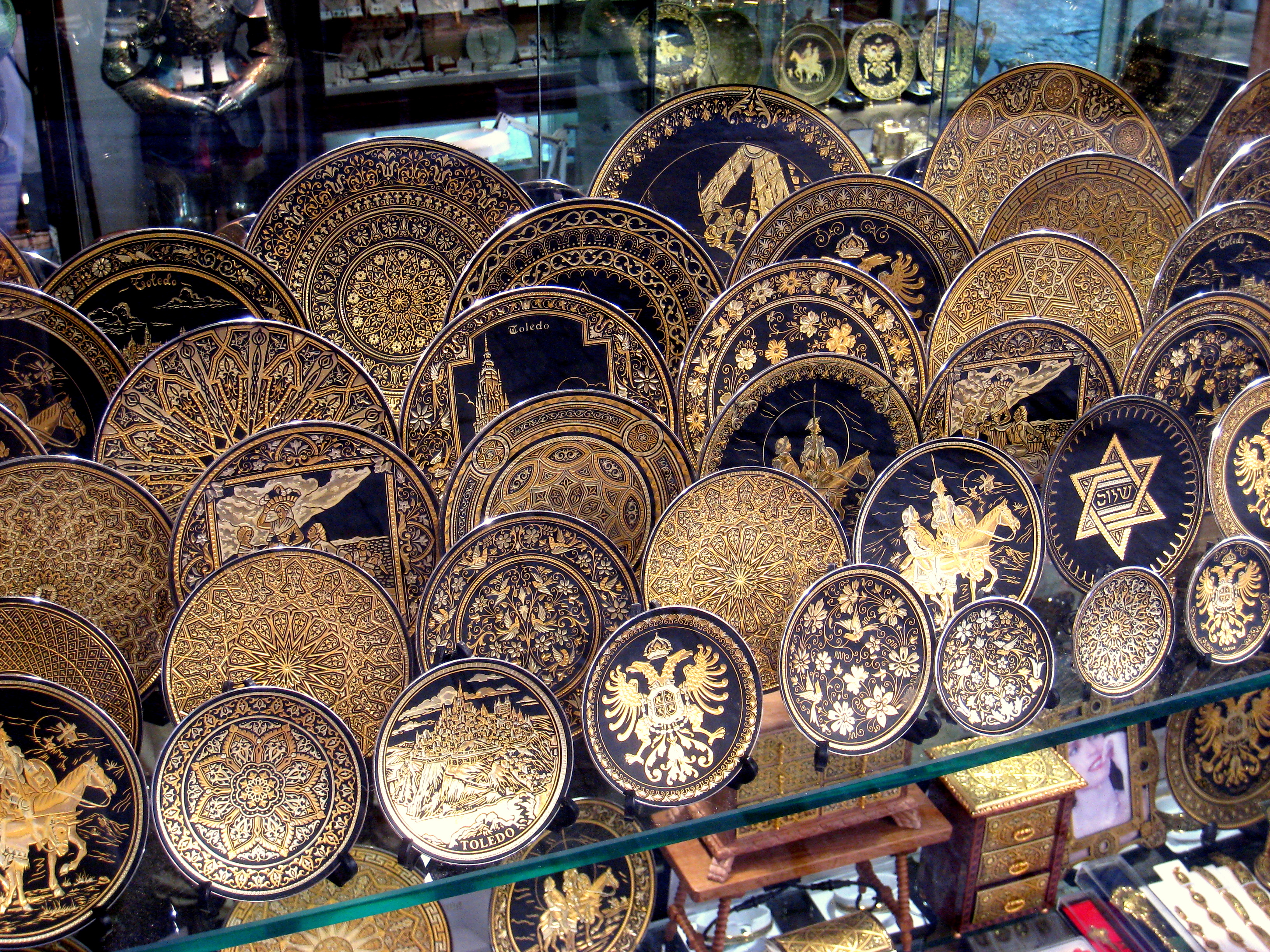
Many cultures have traditional patterns.

Poland:

Image result for traditional patterns poland

Romania:


https://s-media-cache-ak0.pinimg.com/564x/38/a4/0a/38a40a62665715bcba4ad28adb023886.jpg


Navajo (American Indian):

https://s-media-cache-ak0.pinimg.com/originals/d8/2e/e7/d82ee7bbce53ecd1da3fe23e5004ac7d.jpg


Spain:
 http://cdn3.volusion.com/mcypo.smhdn/v/vspfiles/photos/BAR018.29C-2.jpg


http://www.fromspain.com/ProductImages/fiestayellow/charger/web-Charger-Yellow.jpg


https://thumbs.dreamstime.com/x/old-spanish-ceramic-tiles-colorful-background-30952657.jpg


https://thumb1.shutterstock.com/display_pic_with_logo/1062323/199196153/stock-photo-closeup-of-typical-spanish-tiles-199196153.jpg

https://upload.wikimedia.org/wikipedia/commons/9/99/Tourist_items,_Toledo.JPG

sábado, 3 de diciembre de 2016

Our Christmas cards for Bolton have been sent!

After we had made the cards, I sent them in the post.

 Here are just a few:


To learn more about the school in Bolton, visit their webpage here.

Bishop Bridgeman School


martes, 29 de noviembre de 2016

Wayne Thiebaud's delicious art!

Wayne Thiebaud is a pop artist who is famous for his paintings of delicious food.  He uses a lot of repetition in his work.

He also uses the Elements of Art.  For example, Form.

Form means creating an object to be or look three-dimensional. It has height, length, width, and depth. Here are some three-dimensional forms: pyramid, cylinder, sphere, cube.

https://www.eduplace.com/math/mw/background/1/08a/graphics/ts_1_8a_wi-2.gif


Waynethiebaud2 from George Kelly Elementary

We are going to use repetition in our first project inspired by Thiebaud's art. 

You can also play this game:


National Gallery of Art Thiebaud Cake Interactive

For your art project you are going to draw something four times.  It can be an object, food, or whatever you want. Think about the colours you are going to use.

Here is an example by another Pop artist, Andy Warhol.

https://s-media-cache-ak0.pinimg.com/564x/2b/54/27/2b5427b55d53a46fc07ace42fd6af19b.jpg


lunes, 7 de noviembre de 2016

Gaudí and his "trencadís" style

Antoni Gaudí was a Spanish artist and architect who lived and worked in the 19th and 20th centuries (he was born in 1852 and died in 1926.)  One of the techniques he used was "trencadís"-- a mosaic form using broken ceramic tiles to add colour and shapes to a design.

Here are some examples of his work:

https://s-media-cache-ak0.pinimg.com/736x/29/18/a7/2918a7f6f703d5c271a7bce2789dabae.jpg
A lizard from Parque Guell in Barcelona

https://upload.wikimedia.org/wikipedia/commons/e/e7/Park_Guell_Lizard_hand.jpg

https://www.casabatllo.es/wp-content/uploads/2013/10/parc-guell.jpg
Benches in Parque Guell

We are going to take inspriration from this technique for our next art project!


martes, 18 de octubre de 2016

Negative space pumpkin

Another element of art is Space. It is the area above, around, between, and inside things. It can be positive or negative.

http://edtech2.boisestate.edu/matthewklaber/506/Lesson%202/images/positiveandnegativespace.jpg

We are going to create positive/negative space pumpkins.

https://s-media-cache-ak0.pinimg.com/564x/7a/e2/aa/7ae2aabe6b2a13534e67387a8dbe5a55.jpg

From "Art Projects For Kids"

miércoles, 12 de octubre de 2016

Analogous colours, complementary colours

Remember, analogous colours are similar to each other. They are next to each other on the color wheel.

https://s-media-cache-ak0.pinimg.com/564x/84/a8/18/84a8181167d7e364f4857c35beaa430b.jpg


Complementary colours are opposite each other:

https://beatknit.files.wordpress.com/2013/02/complementary-wheel1.jpg

Use of Colour

Here are some paintings that show use of color:

Picasso, La habitación azul, 1901
Cool colours


Van Gogh, Casa en Auvers, 1890
Analogous colours (next to each other on the color wheel)


Degas, Bailarinas en la barra, 1888
Complementary colours (opposite on the colour wheel)


Matisse, Interior con cortina egipcia, 1948
Complementary colours (red and green)
Cool colours (green and blue)


Rothko, Untitled 1968
Warm colours

You can see all of these paintings and more right here in Madrid at the CaixaForum.

They have an exhibit called "Impressionistas y modernos" that is open until October 23rd.  It is a special collection of famous paintings from the Phillips Collection in Washington, DC.

What do you think?


lunes, 10 de octubre de 2016

Art and the Transformations of the 19th century

Here are some paintings from the 19th century.

The first two are by Claude Monet, and they are of the Gare Saint-Lazare train station in Paris, which opened in 1837.


The next three paintings are by another French painter, Gustave Caillebotte.

Right now you can visit an exhibition of Caillebotte's paintings in the Museo Thyssen!


And here is another painting from that time, by Jean Francois Millet:


and another by Jules Breton:


What can we learn from these paintings about the transformations in society during the 19th century????