Our test is coming up on Thursday. Here are some resources to help you study!
In this presentation, look at slides 1-18:
Conductors and insulators from Mr. M
Electrical Conductors And Insulators from xnpsp5
Finally, a slideshow with everything you need to know for the test!
Mostrando entradas con la etiqueta electricity. Mostrar todas las entradas
sábado, 12 de noviembre de 2016
viernes, 11 de noviembre de 2016
An extra credit project
Extra credit activity for Natural Science:
For an extra point on your exam, you can do one extra
credit activity.
1)
Make
your own compass
--Watch the video on the blog
--Make your own compass
--Take a digital photo or video
--Explain how it works. (video or written)
--If you don’t have a camera, you can draw a picture
of the compass and label the parts. Write your explanation.
2)
Magnetic
or not?
--Find 15 objects and test whether or not they are
magnetic. At least 10 of them must be made of metal. You can use different coins.
--Make a video (optional—not necessary)
--Make a chart:
Name of object
|
What is it made of?
|
Is it magnetic?
|
USA quarter (25 cent coin)
|
Mostly copper
|
|
spoon
|
steel
|
|
Write a conclusion: Objects made of ………………………….. are
magnetic. Examples:
- You must hand in the activity on or before Thursday, 17th November.
- Your written work must be neat and with good presentation.
- You may work individually or with a partner (three people maximum).
- If you make a video or take digital pictures, you can send your project to me by email at:
martes, 8 de noviembre de 2016
A science experiment!
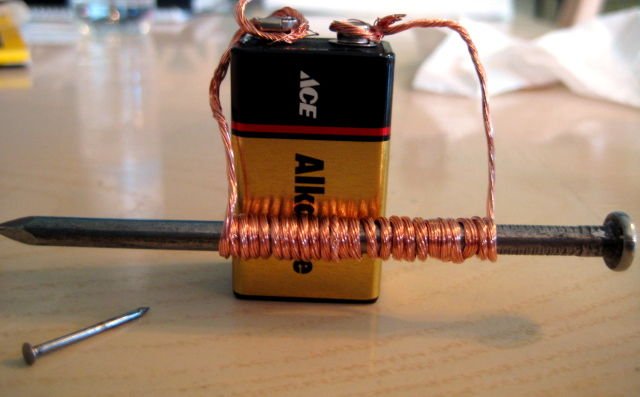
We are going to do an experiment on Friday-- we are going to create electromagnets! For the experiment you will need:
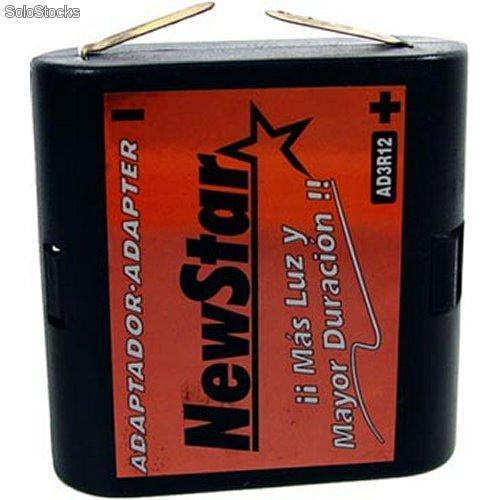
--a battery (pila de petaca):
or 
--50-100 cm of insulated cable
--a long iron nail
Here is a picture:
--a battery (pila de petaca):
or 
--50-100 cm of insulated cable
--a long iron nail
--metal paper clips
You can read about the experiment on page 76 of your book.
martes, 25 de octubre de 2016
sábado, 6 de febrero de 2016
martes, 2 de febrero de 2016
Here is Tesla's power plant at Niagara Falls:

The falls:

Closer to us, we have some hydroelectric power stations, too. You can click here to read about one at the "Cascada del Ézaro" in Galicia where they now have a "Museum of Electricity."

Even closer to us, in La Alcarria, Guadalajara, at Sacedón:
Have you ever seen a hydroelectric power plant?
The falls:
Closer to us, we have some hydroelectric power stations, too. You can click here to read about one at the "Cascada del Ézaro" in Galicia where they now have a "Museum of Electricity."
Even closer to us, in La Alcarria, Guadalajara, at Sacedón:
Have you ever seen a hydroelectric power plant?
viernes, 29 de enero de 2016
More circuits
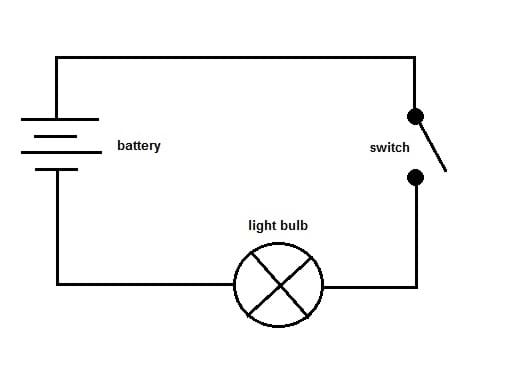
Can you label the parts of this circuit? What type of circuit is it?

Click here to go to the page and see more about electricity.
Here is a diagram of the circuit:
Click here to go to the page and see more about electricity.
Here is a diagram of the circuit:
miércoles, 27 de enero de 2016
How do we use electricity?
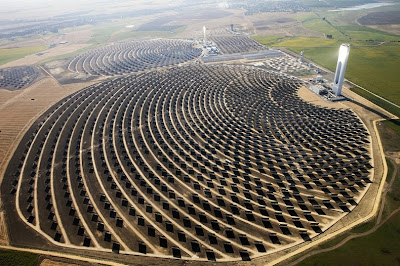
Electricity is generated in power stations. Here is a solar power station in Seville. It uses the Sun's thermal energy to produce steam, which is used to power turbines to generate electricity.


Here is a Nuclear Power Station in Guadalajara:
From the power station, the electricity travels along big cables to our homes. Pylons help keep these cables away from people and things on the ground.
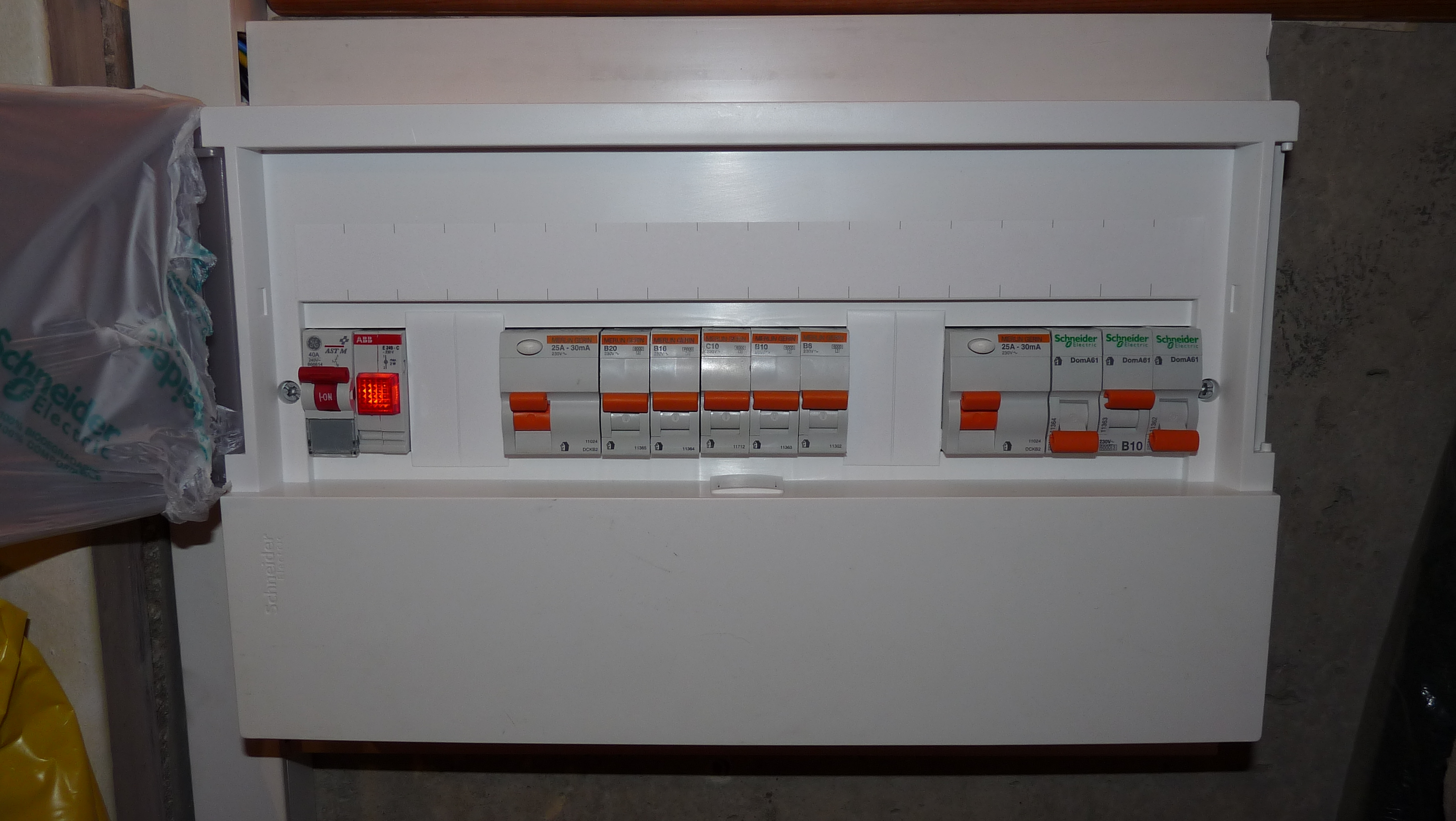
Where the electricity enters our house, there is a fuse box. This makes the electricity safe to use.
From the fuse box, the electricity travels through wires to all the light switches and sockets in our home.
jueves, 21 de enero de 2016
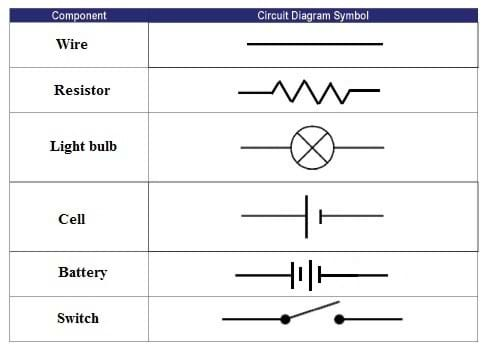
Circuits and symbols
We are learning about electrical circuits.

Making circuits:

Here's a game about making circuits.
Let's try this one!
And here:


Making circuits:
Here's a game about making circuits.
Let's try this one!
And here:
miércoles, 20 de enero de 2016
Electricity song!
Since I know how much you like singing, here is a song about electricity, our next topic in Natural Science. I listened to it when I was a child, so it is an old song, but the tune is very catchy (pegajoso)!
Here are some explanations:
viernes, 15 de enero de 2016
Static Electricity experiment
Watch this!
Static
electricity is the movement of electrons between two
materials.
Opposite charges attract each other.
Objects with the same electric charge are repelled.
Rubbing the balloon gives it a
negative charge. Electrons move from your hair to the balloon. Your hair loses electrons and becomes positively charged.
Opposite
charges attract each other. The balloon
(negative) attracts your hair (positive).
Each hair has a positive charge. The
hairs repel each other (they separate).
Now, look at this explanation of how static electricity is used to paint cars:

Now, look at this explanation of how static electricity is used to paint cars:
miércoles, 13 de enero de 2016
What is an atom?
All matter is made up of microscopic particles called molecules. We can divide a molecule into smaller parts, called atoms. An atom is the smallest part possible-- it cannot be divided. In fact, the word "atom" in Greek means "indivisible."

Electricity is formed when electrons move from one atom to another.

Electricity is formed when electrons move from one atom to another.
Suscribirse a:
Entradas (Atom)