Two games to practice-- these won't work on mobile devices :-(
Mostrando entradas con la etiqueta grammar. Mostrar todas las entradas
martes, 16 de mayo de 2017
Verbs and prepositions
It can be hard to remember which verbs go with which prepositions. Here is an inforgraphic to help you:
viernes, 5 de mayo de 2017
Help with the spiral homework
This week's spiral homework is due on Wednesday, 10th May.
Day 1: Sentence transformations
Day 2: Wishes Pupil's Book p.106; WB p.95
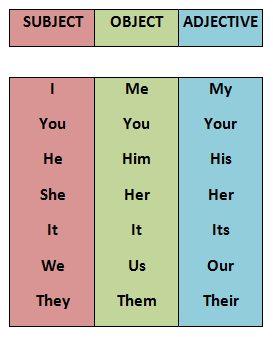
Day 3: Reflexive pronouns
Day 4: Second conditional
Day 5: So do I/ Neither do I
jueves, 4 de mayo de 2017
martes, 28 de marzo de 2017
Forming questions
Do you remember QUASI?

He helps us remember how to make questions:
QU is for Question word:
What
Where
Why
Who
How long
How old
etc.
A is for Auxiliary:
do/does/did
am/is/are/was/were
has/have/had
can/should/must/will/would
S is for Subject:
I/you/he/she/it/we/they
my aunt
Billy
the teacher
the cat
I is for Infinitive:
go play have eat do run drive feel study
Ex: Who (QU) did (A) she (S) meet (I) at the park?
What (QU) should (A) we (S) do (I) after school?
We don't have to use a question word-- we can start directly with the auxiliary for yes/no questions.
Did (A) she (S) meet (I) them at the park yesterday?
There is another way to remember: QUASM.
The M is for Main verb, because sometimes we use a past participle (eaten, taken, studied) or present participle (watching, running, taking).
For example:
What time (QU) are (A) you (S) going (M) to the party?
How long (QU) have (A) they (S) been waiting (M) here?
Read this link for some examples and then a quiz at the end:
An easy way to form (almost) any question in English
Page of links to exercises 1
Page 2

He helps us remember how to make questions:
QU is for Question word:
What
Where
Why
Who
How long
How old
etc.
A is for Auxiliary:
do/does/did
am/is/are/was/were
has/have/had
can/should/must/will/would
S is for Subject:
I/you/he/she/it/we/they
my aunt
Billy
the teacher
the cat
I is for Infinitive:
go play have eat do run drive feel study
Ex: Who (QU) did (A) she (S) meet (I) at the park?
What (QU) should (A) we (S) do (I) after school?
We don't have to use a question word-- we can start directly with the auxiliary for yes/no questions.
Did (A) she (S) meet (I) them at the park yesterday?
There is another way to remember: QUASM.
The M is for Main verb, because sometimes we use a past participle (eaten, taken, studied) or present participle (watching, running, taking).
For example:
What time (QU) are (A) you (S) going (M) to the party?
How long (QU) have (A) they (S) been waiting (M) here?
Read this link for some examples and then a quiz at the end:
An easy way to form (almost) any question in English
Page of links to exercises 1
Page 2
martes, 21 de marzo de 2017
sábado, 18 de marzo de 2017
jueves, 16 de marzo de 2017
English Test 7 23rd March
We will have an English Test next Thursday, 23rd March.
You must study:
Present perfect continuous post
So and Neither post
From class:
Clothes vocabulary (post 1 and post 2 )
Verbs of obligation, prohibition, and advice: Must/mustn't; should/shouldn't; have to/ don't have to. click here video and explanation
Pronouns:

More pronoun practice!
For your test you have to review the irregular verbs from the last unit
(link to post with presentation)
and the ones from the story "Two Heroes":
You must study:
From the book:
--So do I, Neither do I: PB p. 88, WB p. 75 and notes in notebook
--Present perfect continuous; for and since: PB p. 87;
WB p. 74
--Use of apostrophes and irregular plurals (people,
children, men, women) WB p. 77
Present perfect continuous post
So and Neither post
From class:
Clothes vocabulary (post 1 and post 2 )
Verbs of obligation, prohibition, and advice: Must/mustn't; should/shouldn't; have to/ don't have to. click here video and explanation
Pronouns:

More pronoun practice!
For your test you have to review the irregular verbs from the last unit
(link to post with presentation)
and the ones from the story "Two Heroes":
sábado, 4 de marzo de 2017
jueves, 23 de febrero de 2017
miércoles, 22 de febrero de 2017
sábado, 18 de febrero de 2017
More about present simple vs. present continuous
Hello! Happy Saturday! I just found some more things to help you with present simple vs. present continuous.
martes, 14 de febrero de 2017
sábado, 11 de febrero de 2017
martes, 31 de enero de 2017
Present simple vs present continuous
When do we use present simple? What about present continuous?
More practice:
A few things to remember:
--Don't forget the 3rd person "s" (he/she/it)
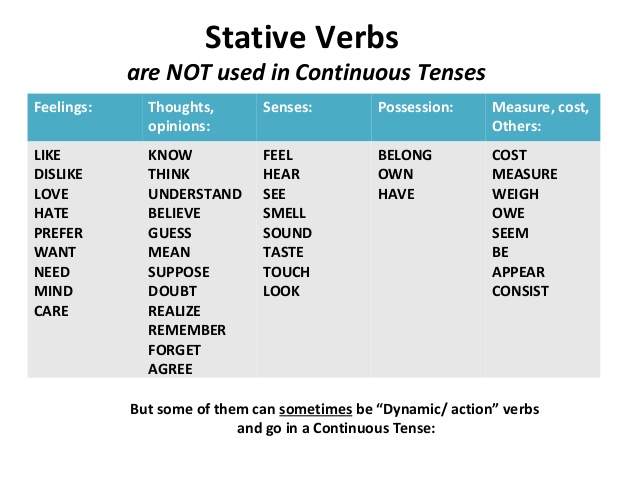
--Some verbs are not usually used in the continuous form.

--Practice the question forms and negatives
LearnEnglishKids page with explanation and games
Practice exercise 1
Practice exercise 2
More practice:
A few things to remember:
--Don't forget the 3rd person "s" (he/she/it)
--Some verbs are not usually used in the continuous form.

--Practice the question forms and negatives
LearnEnglishKids page with explanation and games
Practice exercise 1
Practice exercise 2
jueves, 19 de enero de 2017
Comparatives and superlatives

Comparatives and superlatives in songs:
Comparatives in songs:
Comparing friends exercise
Listening exercise
viernes, 2 de diciembre de 2016
miércoles, 30 de noviembre de 2016
Workbook p. 34
Exercise 1:
--The rider told the horse to jump.
--The teacher asked the children to look at the board.
--The boy asked his mother to buy a cake.
--The farmer told the dog to sit down.
Exercise 2:
--The man told the boy not to climb the ladder.
--The teacher asked the girls not to run.
--The woman told the boy not to shout.
--The woman asked the girl not to pick the flowers.
Exercise 3:
--The teacher told everyone to stand up.
--The man told the boys not to swim in the river.
--Mum asked the children to play quietly.
--Dad told John not to be late.
--Lucy asked Meg not to be angry.
--Mum asked Tom to wash the dishes.
A real bear footprint-- and your last English test of the trimestre
Here is the picture my friend took while she was walking in the mountains over the weekend. It is from a black bear. Luckily she didn't see the bear!

Here is an article about what you should do if you meet a bear.
The last English test of the trimestre will be on Wednesday, 7th December.
It will include some things from the last exam:
--Present continuous, sentences and questions.
--Reported speech and direct speech
And some things from Units 3 and 4:
--Past perfect: had + past participle click here
--Question tags (isn't it/he/she? is it/he/she? aren't you/they/we? are you/they/we?
wasn't it/he/she? was it/he/she? weren't you/they/we? were you/they/we?)
--Asked someone to/ told someone to...
--And/so/but/because (click here)
And a Listening exercise, a writing exercise.
Very important! Review your irregular verbs!!!!

Here is an article about what you should do if you meet a bear.
The last English test of the trimestre will be on Wednesday, 7th December.
It will include some things from the last exam:
--Present continuous, sentences and questions.
--Reported speech and direct speech
And some things from Units 3 and 4:
--Past perfect: had + past participle click here
--Question tags (isn't it/he/she? is it/he/she? aren't you/they/we? are you/they/we?
wasn't it/he/she? was it/he/she? weren't you/they/we? were you/they/we?)
--Asked someone to/ told someone to...
--And/so/but/because (click here)
And a Listening exercise, a writing exercise.
Very important! Review your irregular verbs!!!!
martes, 22 de noviembre de 2016
Suscribirse a:
Entradas (Atom)