Mostrando entradas con la etiqueta kinetic art. Mostrar todas las entradas

viernes, 20 de noviembre de 2015

Artist or engineer?

Here is an advertisement that features Theo Jansen, the sculptor we are going to see.


He says:

"My name is Theo Jansen.   I’m a kinetic sculptor. My sculptures are made of very light materials, and they are powered by the wind. Part of me is an engineer who wants to map the progress of mobility. Another part is an artist who wants to sculpt the air that surrounds us and give it shape. And always I strive to push the boundaries of what we know, and what seems possible to us at this moment in time. The walls between art and engineering exist only in our minds."

Spanish architect Santiago Calatrava designs bridges and other structures in an artistic way.  This bridge in Calgary, Canada, was designed by him. First it was called the Calatrava bridge, but then the name was changed to the Peace Bridge. Can you recognize any of the machines in the beginning? Diggers, bulldozers, cranes...


He has also designed bridges in Bilbao:

http://www.euskoguide.com/images/bilbao/zubizuri-calatrava.jpg


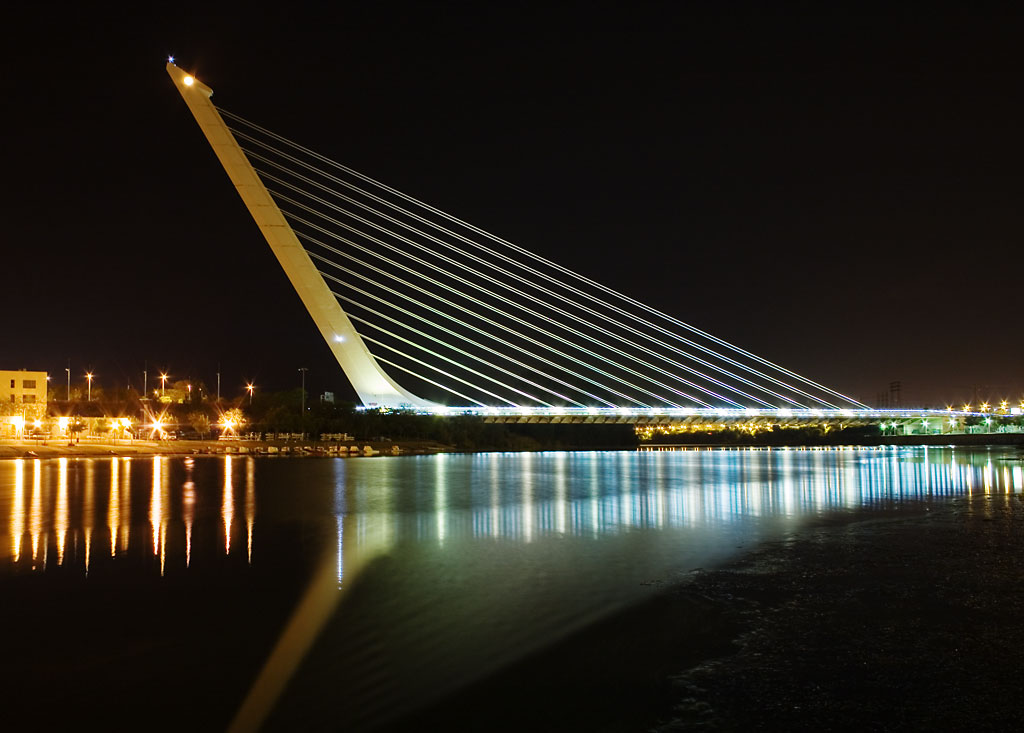
Seville:

https://upload.wikimedia.org/wikipedia/commons/b/b2/Calatrava_Puente_del_Alamillo_Seville.jpg


and this city of Arts and Sciences, which was built in the bed of the River Turia in Valencia.

https://planyourcity.files.wordpress.com/2012/07/calatrave.jpg

So, are they artists or engineers? Or, perhaps we can say that they are both!

viernes, 6 de noviembre de 2015

Theo Jansen in El Hormiguero

We are going to see these sculptures!


Palaeolithic Thaumatropes, Moving images... and a surprise!

Last week we saw some examples of thaumatropes, and how they were popular in 19th century Britain. But did you know that prehistoric people made their own thaumatropes and even had early cinema?  This article explains, and you can watch the animation.

The hunt: Seen lit by flickering torchlight, the images appear to move thanks to the optical phenomenon known as the persistence of vision, the researchers claim


Now we have new ways of making moving images. Check out these animated GIFs by David Szakaly:

120430

130810


And the surprise!  Would you like to meet these creatures?????


 On November 20th (5ºB) and November 24th (5ºA) we are going to see them in Madrid!

sábado, 24 de octubre de 2015

Art!

In Art we have been learning about how LINE (línea) and VALUE (saturación) can give the illusion of movement or depth.  Here are a few examples of our work:


miércoles, 21 de octubre de 2015

Kinetic sculpture

Hello!  We have been learning about kinetic art, and now we are going to see some kinetic sculptures. Here are a few by an artist from the Canary Islands, César Manrique:


His home in Tenerife:  Can you describe the coasts?


And some by Anthony Howe:


miércoles, 23 de septiembre de 2015

Art and movement

In Art we are studying how some artwork can express movement. Do you remember these examples from class?

http://www.galleryintell.com/wp-content/uploads/2013/01/Hokusai-The-Great-Wave-off-Kanagawa.jpg
Hokusai, The Great Wave of Kanagawa, c.1830-1833


Frederic Remington, The Calvary Charge. 1907


Cave art, prehistoric era

Do you like the "Op Art" of Victor Vasarely (Hungarian, 1906-1967) ?


Do you remember how to make the 3D-hand? Watch these videos to remind you.


Here's another video about making Op Art:


Op Art spheres

Tumbling spheres video