Mostrando entradas con la etiqueta energy. Mostrar todas las entradas

domingo, 29 de noviembre de 2015

What are the effects of thermal energy?

 Thermal energy can have different effects.

It can change a solid to a liquid: Melting.

http://www.wpclipart.com/food/beverages/ice_cube_melting.png


It can change a liquid to a gas: Evaporation.

http://www.inyopools.com/blog/wp-content/uploads/2015/10/evaporation.jpg


Thermal energy can cause chemical changes. 
These changes are permanent, so they cannot be reversed.

http://www.piece-a-cake.com/images/baking-a-wedding-cake.jpg


Also, thermal energy causes molecules to vibrate. As a result, the material expands.  (Expansion.)
Watch this video to see an example of expansion. 


And going back to our lesson on how heat travels: one more example of convection currents: warm air rises!


miércoles, 11 de noviembre de 2015

Heat transfer

Heat Energy can be transferred from one object to another in different ways.

When two objects are in contact, thermal energy is transferred from the hotter object to the colder object.  This is called CONDUCTION. The molecules in the hotter object are moving faster, and they transfer their energy to the molecules in the colder object.

But, what is a molecule?

Molecules are the smallest part of any substance. They are made up of two or more atoms linked together.  Here is a water molecule. It has two atoms of Hydrogen and one atom of Oxygen.

http://www.ces.fau.edu/nasa/images/module_3/WaterMolecule.gif

Thermal energy travels through a gas or liquid by CONVECTION.

Thermal energy can be transferred through space by electromagnetic waves. This is called RADIATION.

 Here is a presentation:

lunes, 19 de octubre de 2015

Studying for Natural Science

Our test for Unit 1 is on Thursday.  You don't need to memorize exactly the words from the text, but you should be able to:

--Name and give examples of the six forms of energy
--Explain the two forms of mechanical energy
--Different energy sources (where does it come from? ex. food, the sun, the wind...)
--Identify and explain some energy transformations (when one form of energy changes into another) Ex: In a fan, electrical energy is transformed into thermal energy.
--Renewable and Non-renewable energy sources (explain and give examples)
--Problems caused by using non-renewable energy sources
--Ways to help protect our planet

A good way to study is to make mind maps like we did in class.

Also, read over the Sci Facts (you don't have to memorize them, but they can help reinforce the concepts.)

Here are all of the posts and links to the games for this unit.

Good luck!


jueves, 8 de octubre de 2015

Classifying energy sources

In class we learned about renewable and non-renewable energy sources.

http://lunar.thegamez.net/greenenergyimage/definition-of-renewable-energy-resources/renewable-and-non-renewable-resources-oscar-education-580x318.jpg


What are these energy sources?

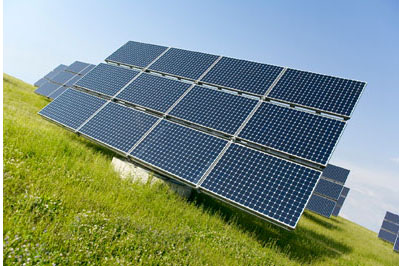
http://lunar.thegamez.net/greenenergyimage/definition-of-renewable-energy-resources/wind-power-definition-of-renewable-energy-499x500.jpg                 http://farazenergy.yolasite.com/resources/solar.jpg


http://www.twothirtyvolts.org.uk/images/education/environment/slide-dam.jpg   http://www.scientificamerican.com/sciam/cache/file/57F48847-76F1-4C0F-870B70035D5A41CB.jpg

http://www.theinnovationdiaries.com/wp-content/uploads/2011/07/what-are-renewable-resources.jpg

Try these games about renewable and non-renewable energy sources!

Most-used sources of energy.

Play this game about classifying energy sources.

miércoles, 30 de septiembre de 2015

miércoles, 23 de septiembre de 2015

Kinetic or potential energy?

What kind of energy can you see in these pictures?  They all show forms of mechanical energy: potential energy and kinetic energy.