Mostrando entradas con la etiqueta ecosystems. Mostrar todas las entradas

lunes, 12 de septiembre de 2016

My Holidays

On my holidays, I visited my family in New York. (The State of New York-- not New York City!)  It rains a lot there and everything is very green.

Here are some pictures!

Do you remember what this kind of plant is called? What type of plant is it?  How does it reproduce?


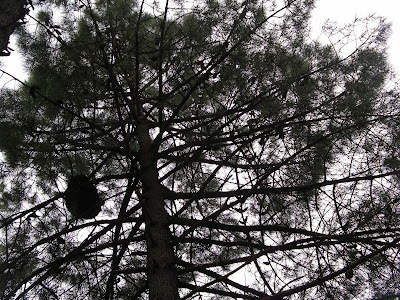
What are these two things growing on the dead tree? What can you remember about each one?  


What kind of ecosystem do all of these organisms live in?

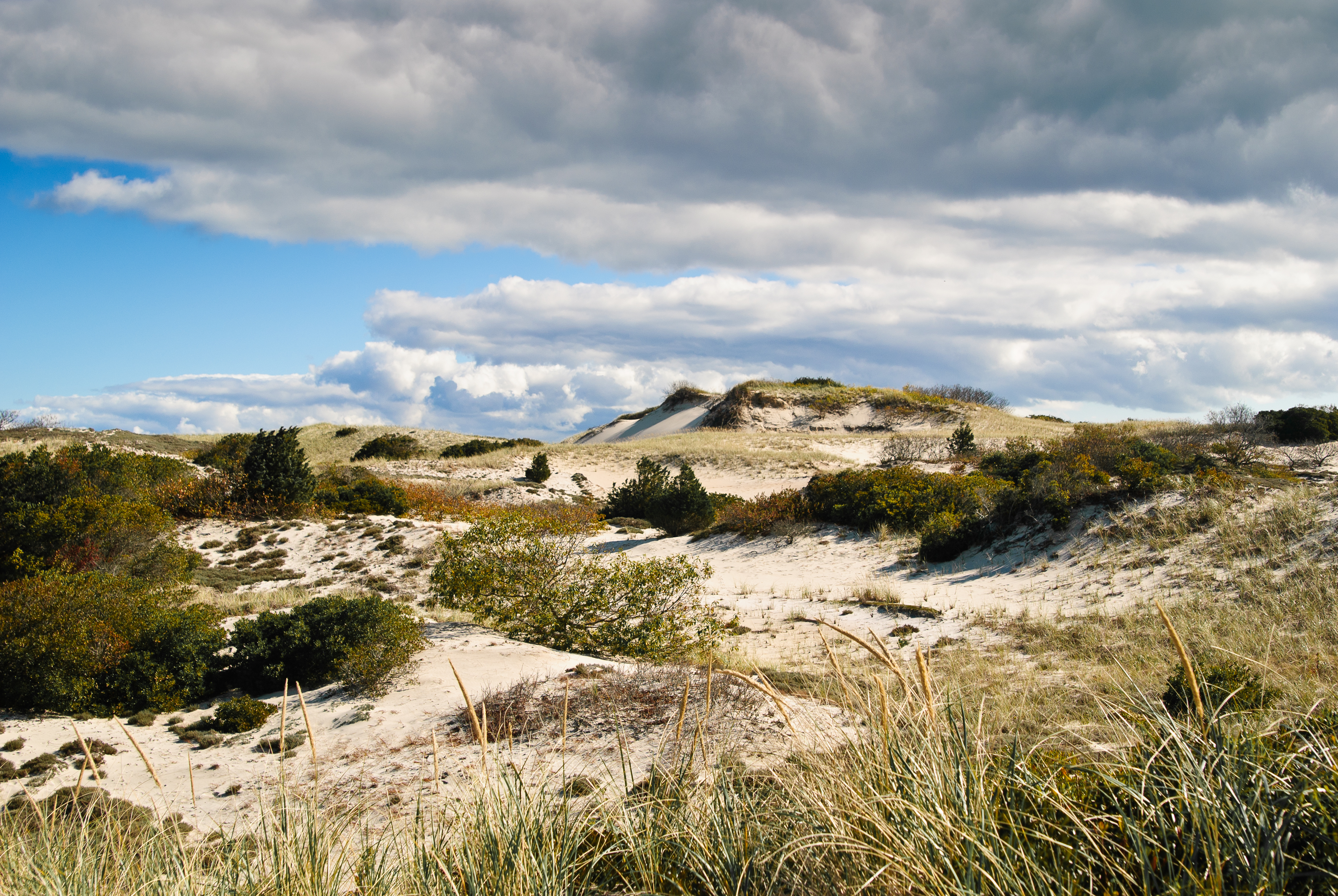
And, what ecosystem is this?  
What are the living and non-living elements in it?


What type of animal is this?  What ecosystem does it live in?


jueves, 30 de junio de 2016

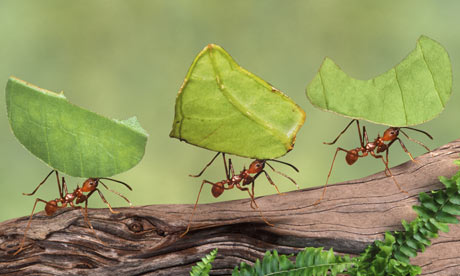
What are these ants doing?

Leaf-cutter ants live in Central America, South America, and parts of North America. 

https://static-secure.guim.co.uk/sys-images/Guardian/Pix/pictures/2009/3/8/1236554201646/Leaf-cutter-ants-Atta-cep-003.jpg

What do they do with the leaves?  They don't eat the leaves:  they are farmers!


They grow fungus on the leaves to eat!

miércoles, 15 de junio de 2016

Journey of a plastic bottle

What happens to the plastic we throw away? Here are three possibilities. 


Did you know that by the year 2050, the plastic in our oceans will outweigh (weigh more than) the fish? Yikes!

But, some people are looking for solutions to the problem.


Or, we could just make art!

13 giant sculptures made from beach waste


Video.

More here.

And this artist, Stuart Haygarth

http://static1.squarespace.com/static/550b30c4e4b008499ef92ebe/5563216be4b0b17b1465a968/55840301e4b0b65f09fca658/1434714881450/dung.green-landscape.jpg?format=500w


Another artist, Jane Perkins

http://bin.snmmd.nl/m/rcbwq4yptfi8_wd640.jpg

If you want to make some recycled art this summer, you can send the photo to bilinguismomiguelhernandez@gmail.com  and I will put it in the blog!


miércoles, 8 de junio de 2016

Ecosystems Review PowerPoint

Here is a game to help you review. You must also study your notes and your book.

You can check your answers by clicking on the question mark. To choose a new question, click on "Categories" in the bottom left corner.

Have fun!

sábado, 4 de junio de 2016

Lichen: an interspecific relationship

At GREFA we saw a lichen on a tree. Lichen can only live where the air is clean.


A lichen is an example of an interspecific relationship. It is the association between an algae and a fungus (hongo).  It grows mostly on the north side of the tree, because it likes moisture and does not like a lot of direct sunlight.

The algae is a plant, so it performs photosynthesis and provides nutrients.  The fungus provides shape and structure to the organism. This is beneficial to both, so they have a relationship called "symbiosis."


Here is a video:


Here is another example of an interspecific relationship we saw at GREFA: a disease in a tree that is a relationship between bacteria and fungus, that is harmful to the tree. This kind of interspecific relationship is called  "parasitism."

https://blogger.googleusercontent.com/img/b/R29vZ2xl/AVvXsEiDmE8iLss5qJawp366ntHtATmCXvuFcQu0xFH_-iKy9DIQq4BtcwctEbWmWU1uwAVC0v4yPvmFCjEiKmTNQnisO2PpyyQIsKs3AMl-rtFLKLSAW_6ZOob0j5qHJ-7W54TUo1Jkpk0oPAKG/s1600/004+Escoba+de+bruja+en+pino.+La+Maroma+por+el+Robledal.+26-3-2010..JPG


viernes, 3 de junio de 2016

World Environment Day!

http://tnenvis.nic.in/WriteReadData/UserFiles/image/wed.jpg

Sunday, June 5th is World Environment Day, the United Nations’ most important day
for encouraging worldwide awareness and action for the protection of our environment. 

 Above all, WED serves as the ‘people’s day’ for doing something to take care of 
the Earth or become an agent of change. That ‘something’ can be focused locally,
nationally or globally; it can be a solo action or involve a crowd – everyone is free to 
choose.

Each year there is a theme, and this year's theme is "Go Wild for Life!"  

From the official website:

This year’s theme for WED – Go Wild for Life – encourages you to celebrate all 
those species under threat and take action of your own to help safeguard them 
for future generations. This can be about animals or plants that are threatened 
within your local area as well as at the national or global level - many local 
extinctions will eventually add up to a global extinction! Whoever you are, and 
 wherever you live, show zero-tolerance for the illegal trade in wildlife in word
 and deed, and make a difference.

Remember the threatened and endangered species we learned about at GREFA?

They are having an "Open Doors" day (Día de Puertas Abiertas) tomorrow, Saturday June 5th. If you want, you can go with your family to learn more.


jueves, 2 de junio de 2016

Land Art

Artists like Andy Goldsworthy make art using materials they find in nature. The art they create is temporary, so they take photographs of it.


Videos from another land artist, Dietmar Voorwald, here.

You are going to create your own Land Art!

--Use only materials found in nature: leaves, sticks, stones, dirt, sand, etc.
--You must create your art in a natural space: a garden, a park, etc.
--After you finish your creation, take a photo of it. You can bring the photo to class in a "pincho" (flash drive) or send it to this email: bilinguismomiguelhernandez@gmail.com  (no diéresis over the u). Don't forget to include your name so I know who sent it!

--If you can't take a digital photo, you can bring a regular photo to class.

--If you don't have a camera, bring your materials to school and you can make your art in the pine tree area of the patio, and I will take a photo.

I must have everyone's photos by Monday, 13th of June.

Have fun!


martes, 31 de mayo de 2016

We're going to GREFA!

https://encrypted-tbn1.gstatic.com/images?q=tbn:ANd9GcR84MXQLLkALNiAzfI90jhnWlzdTYb7fNOB524JhdXQZR_XQNhFyg

On Wednesday, June 1st, we are going to visit GREFA, the wildlife rehabilitation centre. It's a hospital for wild animals!   We afre going to learn about the work they do, what kind of animals they help, and lots more.

Here is a link to their website.

 
What do you think this animal is?  Why is it a problem?

http://contenidos.educarex.es/mci/2003/19/imagenes/topillocampesino.jpg
Topillo campesino  Common vole

It is a species that has invaded the northern meseta (Castilla Leon),  creating problems for farmers. The population grew very quickly, so to control it, poison was used. But, this had some bad effects on other animals, too.


GREFA has helped to control the problem using natural predators:

Cernícalo vulgar

Comadreja

Lechuzas


 You can read about it here.

While we are there, think about:

--Were any of the animals there affected by changes to their environment?  What type?

Natural changes: seasonal changes, naturally-caused fires in the chaparral ecosystem….

Changes due to human activity: pollution, overfishing, forest fires, deforestation….

--What ecosystems and habitats do we learn about?
--What do the animals eat? Where do they fit on a food chain?

The Black vulture (buitre negro) is an animal that is in danger of extinction. Humans crowded it out of its habitat.   The population of this animal is very low, but GREFA is working to protect it.

What other endangered animals are being helped?

How can we help wild animals?


domingo, 29 de mayo de 2016

miércoles, 25 de mayo de 2016

Ecosystem art

These paintings represent different ecosystems.

The Waggon Tracks - Miro Joan
Joan Miro, The Wagon Tracks

http://uploads7.wikiart.org/images/paul-gauguin/tahitian-landscape-1897.jpg!Large.jpg
Paul Gauguin, Tahitian Landscape

http://www.henrirousseau.net/images/famous/surprised.jpg
Henri Rousseau, Surprised

http://uploads5.wikiart.org/images/georgia-o-keeffe/black-mesa-landscape-new-mexico-out-back-of-mary-s-ii.jpg!Large.jpg
Georgia O'Keefe, Black Mesa Landscape, New Mexico – Out Back of Mary`s II  

http://pem.org/writable/resources/image/overlay_full/polar_may_n_greenland-.jpg
Rockwell Kent:   May, North Greenland, 1935-37

On Friday you are going to paint an ecosystem. You have to choose one and think about the non-living things (biotope) and living things (biocoenosis) that you are going to paint. Think about what types of colours you will need: warm colours, cool colours...

viernes, 20 de mayo de 2016

More ecosystems!

In our book we learn about pond, woodland, coast, prairie, and city ecosystems, but there are many more. 

Warm Desert Ecosystem:

http://cashmancuneo.net/pictures/fc/web%20desert.jpg

Webpage for kids about desert ecosystems


Taiga:


IB Geography - Ecosystems. Biomes - Taiga aka Coniferous forest from karoliine


Cold desert (tundra) ecosystems:

http://www.conservationinstitute.org/wp-content/uploads/2013/07/Arctic-Haresarctic-wl-Flickr.jpg


Rainforest ecosystems:

http://janisart.com/wp-content/uploads/2010/10/Inside-the-Rainforest-FINAL1.jpg


Which one would you like to visit?


miércoles, 18 de mayo de 2016

Trophic relationships

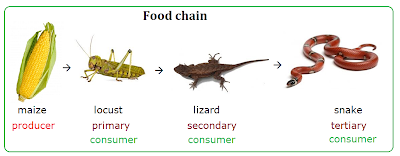
The relationships between organisms that eat and organisms that are eaten are called trophic relationships.

A food chain shows the trophic relationships between different organisms.

What do you know about food chains?  

Where you see the arrow, substitute the words "is eaten by."


https://blogger.googleusercontent.com/img/b/R29vZ2xl/AVvXsEj25zgyf4SRLo7dXqoqMXb45wva99MjkAwGAWx_9h2sRINSNYCNVj8EtbzWM3ExLot4NDy6mgEJWNMP8YX4lLkTdeQriP0VyzKCI4DRTFGfkthtbHCFElZq_17xu2va0dmYOye8jdhbN2Tw/s1600/food+chain.png

The maize is eaten by the locust. The locust is eaten by the lizard. The lizard is eaten by the snake.

What happens to the snake when it dies? It is broken down by decomposers (fungi and bacteria).

Try this game.

Learn about terrestrial ecosystems and play a game.

Make some food chains.


A song!