Mostrando entradas con la etiqueta Middle Ages. Mostrar todas las entradas

viernes, 11 de marzo de 2016

The Book of Kells

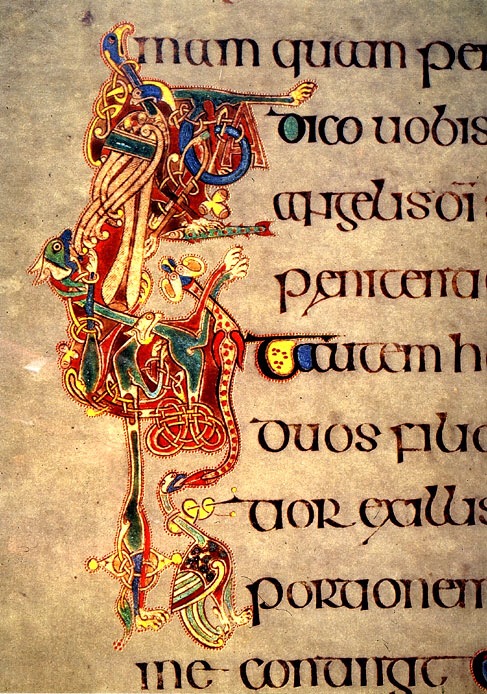
One form of art in the early middle ages was the Illuminated manuscript. Monks in monasteries decorated their religious texts with beautiful drawings and letters.

These pages are from one illumninated manuscript from Ireland called The Book of Kells. It was created around 800 AD.

https://aeb85937.files.wordpress.com/2015/06/img_6117.jpg

This is a dog:

http://art-imagery.com/images/kells_111r2_dog.jpg

Here are some of the letters:

http://www.heraldryclipart.com/images/heritage_kells_sam.gif

It used designs called "celtic knots."

external image screen480x480.jpeg


We can make them with rope:

How to make a celtic knot with rope

Or we can draw them on paper:


jueves, 25 de febrero de 2016

Three cultures of Alcalá de Henares

Did you know that in the Middle Ages, Alcalá was home to three cultures: Christianity, Islam, and Judaism?  For much of this time, the three cultures coexisted peacefully.

http://www.youth-time.eu/images/53/1ggggg.jpg


Do you know where these signs are in our city?

http://www.signsinthecity.net/_files/files/Alcala-Feel_The_City/the_three_cultures-signs_in_the_city.jpg

Here you can read about the neighborhoods (in Spanish):

La alijama (Jewish quarters)

La morería (Muslim neighborhood)

The Christian city

This is from the webpage of the City Hall. You can find more information there about the history of Alcalá during the Middle Ages!


martes, 23 de febrero de 2016

Architecture: Vaulting

Your book talks about "barrel vaults" (Romanesque) and "ribbed vaults" (Gothic). But, what does that mean?  Here are some pictures:


Barrel vault:

http://www.setareh.arch.vt.edu/safas/design_imgs/Barrel%20Vault%20of%20Basilica%20of%20St%20Sernin%201100.jpg


http://study.com/cimages/multimages/16/abbey_of_boscodon-nef.jpg3.jpg


Ribbed vault:

https://classconnection.s3.amazonaws.com/408/flashcards/693408/jpg/q47596931326752525687.jpg

http://www.essential-architecture.com/STYLE/me04-Salisbury_Cathedral_Detail_Arches.jpg

lunes, 22 de febrero de 2016

Romanesque vs. Gothic Architecture

In Spain, many Romanesque churches, monasteries, and cathedrals were built between the 11th century and the mid-12th century.

Here are some of the characteristics:

--Stone replaces wood as the main construction material.
--Buildings had thick walls and not many windows. The windows were small.
--The arches were semicircular.
--They used barrel vaults.


Here is a Romanesque church, San Martin de Tours, in Palencia.

By I, Santiperez, CC BY-SA 3.0, https://commons.wikimedia.org/w/index.php?curid=2524492


Gothic Architecture was popular from the 12th century to the 16th century.  

Its characteristics:

--Churches were tall and let in a lot of light.
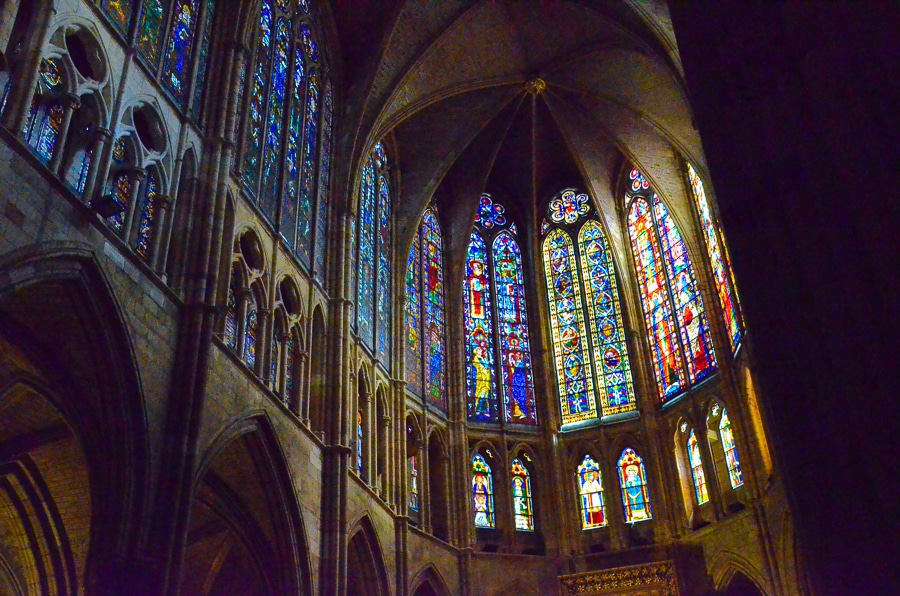
--Walls were thinner and had large, stained-glass windows.
--The pointed arch was used.
--They used ribbed vaults.

Can you find all three of these characteristics in the Cathedral of León?

https://upload.wikimedia.org/wikipedia/commons/9/93/Fachada_de_la_Catedral_de_Le%C3%B3n.jpg

https://travelpast50.com/wp-content/uploads/2013/01/cathedralleon.jpg


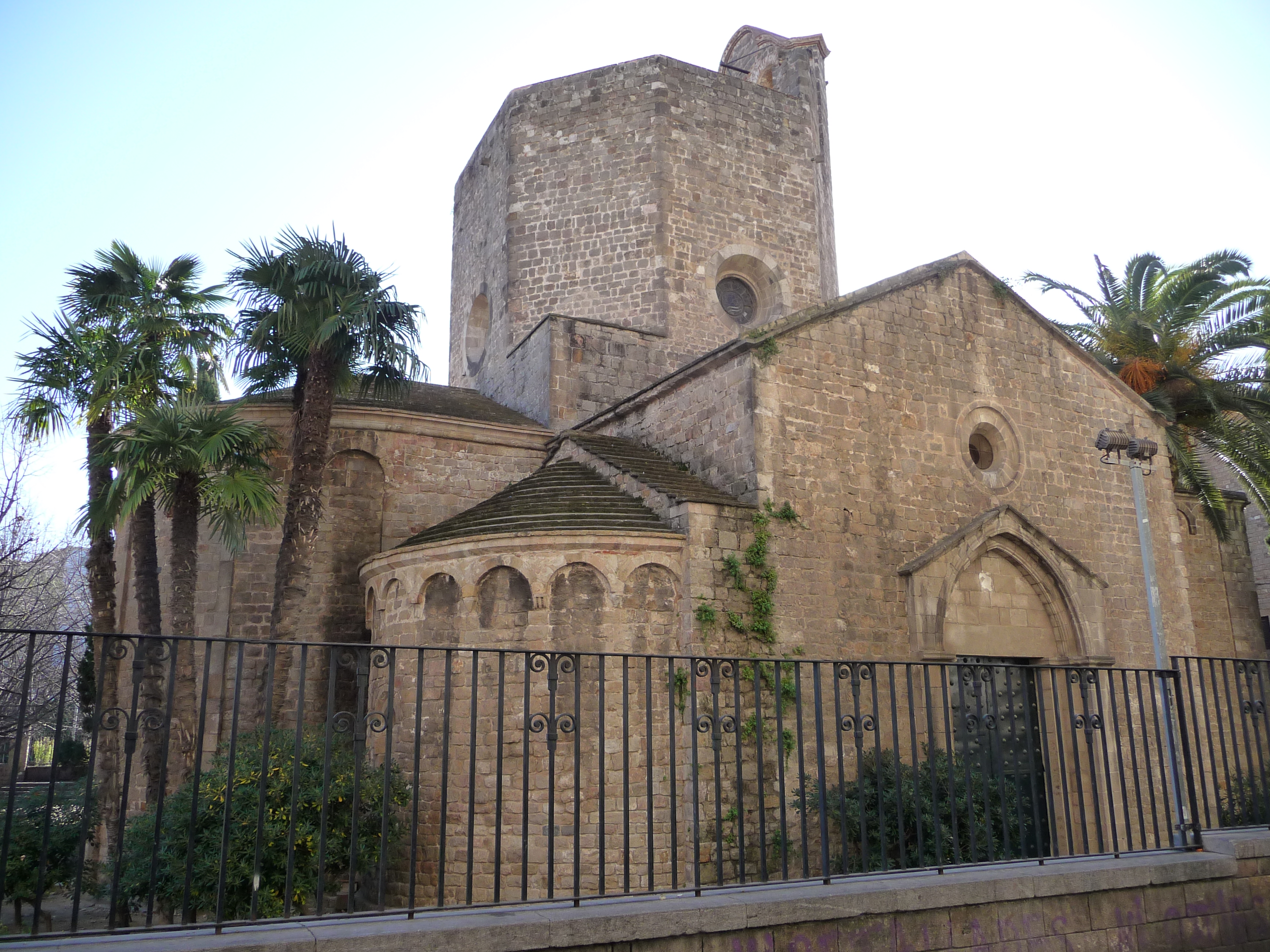
Do you think these buildings are Romanesque or Gothic?


Monastery of San Pau, Barcelona
https://bedandbreakfastinbarcelona.files.wordpress.com/2012/02/sant-pau-del-camp-004.jpg


Burgos Cathedral, Spain


http://www.pelerin.com/var/pelerin/storage/images/compostelle-et-autres-chemins/chemin-de-saint-jacques-de-compostelle/le-camino-frances-vers-saint-jacques-de-compostelle/fromista-castilla-y-leon/27731526-3-fre-FR/Fromista-Castilla-y-Leon_lightbox_full.jpg
Frómista, Castilla-León


viernes, 19 de febrero de 2016

Islamic Art and tessellations

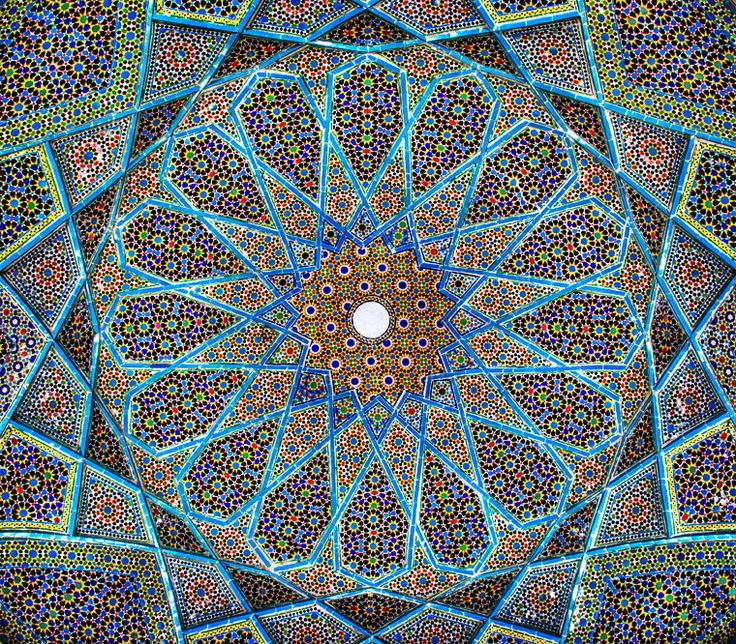
Islamic Art often used geometric designs and tessellations:


http://www.thelck.com/patterns/images/rabat.jpg

https://blogger.googleusercontent.com/img/b/R29vZ2xl/AVvXsEiDvDhwmyoKQSrXH5JEloTZmAi-sfhA6k1DtGVRCnULYkYS0ucJ6rBrUT1ruG51-yTg6rENUdXdCJEbz35t8Lek56gW2l4wUbf2VQLSO5v27ibSPBtgNZvUD65TvArYIv7IhbXZxDCzpOo/s1600/P1010498.JPG

https://flextiles.files.wordpress.com/2014/11/iranian-geometry3.jpg


Interactive tessellation creator here.


Some tessellation art projects from a 7th grade in the USA:


miércoles, 17 de febrero de 2016

Life in Medieval Society

In the Middle Ages, society was divided into three groups: 

--The nobles
--The clergy
--The commoners. We can divide this group into: artisans and merchants (people who made and sold products)  and peasants (people who worked on the land growing crops.)

http://www.traditioninaction.org/OrganicSociety/Images_1-100/A_044_3Classes1.jpg


At first, most people were peasants.  Later, by the 12th century, cities became very important. The people who lived there were called the bourgeoisie (burgueses). Artisans organised themselves into guilds (gremios).

Play this game to see how much you know about the  Medieval Christian society. 

This presentation tells you about the Middle Ages (Visigothic Kingdom, Al-Andalus, and Christian Kingdoms.)  There are even some short videos!

Christian Spain


In 1031, the Caliphate of Cordoba was divided into separate taifas. On  this map you can see the different taifas. The kingdoms above the purple line are Christian Kingdoms and the ones below the purple line are the Muslim taifas.


Taifas


In this map you can see the different stages of the Reconquest (Reconquista.)


http://d3ds4oy7g1wrqq.cloudfront.net/algargoshistoria/myfiles/Etapas-de-la-Reconquista.jpg?Expires=1364943600&Signature=J-O~GZ9YPALpJdwZKQECSQuAeOoSQbD0W0yoDHuN3ddGBSDC6e405zuFXbmIR9OGKc-dFDu4MXdIBsM6EmdqRBwcamdegZCb~2lSlPFlen9ZkW91VWlEPCaB7795ma77mfJqogm~Ca9ADQ3cfSqpWDuIgOEY0e1VcXmCvup~Dis_&Key-Pair-Id=APKAJYN3LZI5CG46B7AA&Policy=eyJTdGF0ZW1lbnQiOlt7IlJlc291cmNlIjoiaHR0cDovL2QzZHM0b3k3ZzF3cnFxLmNsb3VkZnJvbnQubmV0L2FsZ2FyZ29zaGlzdG9yaWEvbXlmaWxlcy9FdGFwYXMtZGUtbGEtUmVjb25xdWlzdGEuanBnIiwiQ29uZGl0aW9uIjp7IkRhdGVMZXNzVGhhbiI6eyJBV1M6RXBvY2hUaW1lIjoxMzY0OTQzNjAwfX19XX0_

The first of the Christian Kingdoms was the Kingdom of Asturias (colour red on the map) in 722 AD. Then the Reconquest moved south little by little until the last Muslim Kingdom, Granada, fell to the Catholic Monarchs in 1492 AD.


Here is a short video (in Spanish) about the Reconquest:


For your test, you need to know these important dates:

722-- Kingdom of Asturias founded.
1212--Battle of Navas de Tolosa. Christian forces win control of much of the southern peninsula.
1492-- Conquest of the Kingdom of Granada by the Catholic Monarchs.

lunes, 15 de febrero de 2016

Al-Andalus

What do you know about Al-Andalus?

Try this and see! 

What do you need to know for the test?

Important dates: 

711 AD
929 AD
1031 AD

Vocabulary:

Islam
Muslims
Koran
caliphate
taifas
zoco
medina
alcazaba
arrabal

Other information:

Muslim contributions to:
--Mathematics
--Agriculture
--Craft and Industry

Name two examples of buildings in Spain from this time period:
--Mezquita (Mosque) of Córdoba
--The Alhambra of Granada

Here you can find out more about Art and Architecture in Al-Andalus.


lunes, 8 de febrero de 2016

Visigothic Spain

In your book you have a map of Roman influence in the Iberian peninsula (p. 88).  But, in the 3rd century AD ( siglo III d.C.)  the Roman Empire was in decline.  

Roman Emperor Theodosius (Teodosio) divided the Roman Empire into two parts: The Western Roman Empire (capital in Rome) and the Eastern Roman Empire (capital in Constantinople.)

http://bakerelectronicportfolio.weebly.com/uploads/3/8/1/6/38163071/9264492_orig.jpg


The Iberian Peninsula was invaded by Germanic tribes from the north and centre of Europe. In 409, the first Germanic tribes (the Romans called them "barbarians") arrived there: the Suebi (suevos), Vandals (vándalos), and Alans (alanos). 


http://geocurrents.info/wp-content/uploads/2012/01/Alan_Kingdom_Iberian_Peninsula_Map.jpg

The Romans asked the Visigoths (visigodos) for help in 415 AD.  

After the Western Roman Empire fell in 476 AD, The Visigoths established a kingdom that stretched across the Pyrenees. It was called Toulouse (Tolosa.)


https://upload.wikimedia.org/wikipedia/commons/thumb/9/92/Reino_de_los_visigodos-en.svg/2000px-Reino_de_los_visigodos-en.svg.png


In 507, the Visigoths lost much of their kingdom and only kept the land they had in the Iberian peninsula. They set up their capital in Toledo.  (See the map in your book on pg. 89.)


The Visigoths held on to (kept) much of Roman culture: they used the Latin language, and Roman law.

In 589, the Visigothic king Reccared (Recaredo) converted to Catholicism, and so did the rest of his country.

https://upload.wikimedia.org/wikipedia/commons/d/d5/Reccared_I_Conversi%C3%B3n,_by_Mu%C3%B1oz_Degrain,_Senate_Palace,_Madrid.jpg

La conversión de Recaredo, por Antonio Muñoz Degrain, 1888.

Some important artifacts from the Visigothic Kingdom:

The Crown of Recesvinto from the treasure of Guarrazar:

http://www.elsummum.es/wp-content/uploads/2014/10/corona-recesvinto.png

See it in ·3D here:

The church of San Pedro Nave in Zamora:

https://blogger.googleusercontent.com/img/b/R29vZ2xl/AVvXsEidlzM0_vechmrzsLmysn3i4tm3HnylKOPwQxbROhdPiyCYsjBARK7_0XGVkUJPJOEZIrSQqV_hb5Mi09qvVJG8qHcBwvjHAybXNm2ExRbW0X57M04lEs_tlGoIyQJOI2LULxnB_9PUCLY/s320/San+Pedro+de+la+Nave.jpg


The church of San Juan de Baños, Palencia:

SAN JUAN DE BAÑOS


In 711, Muslim forces invaded and defeated the last Visigothic King, Roderic (Rodrigo), in the Battle of Guadalete. This began the period of Muslim domination of the Iberian Peninsula.